
Climate Change and Social Vulnerability: Proposing Equitable Public Policies in Nabeul
Climate change in Tunisia, particularly in the governorate of Nabeul, has evolved into a structural challenge that threatens social and economic stability. Rising temperatures, water scarcity, and recurrent flooding are not affecting everyone equally; they are disproportionately impacting vulnerable populations, including farmers, fishermen, women, the elderly, and low-income households, who often lack the resources to adapt or recover.
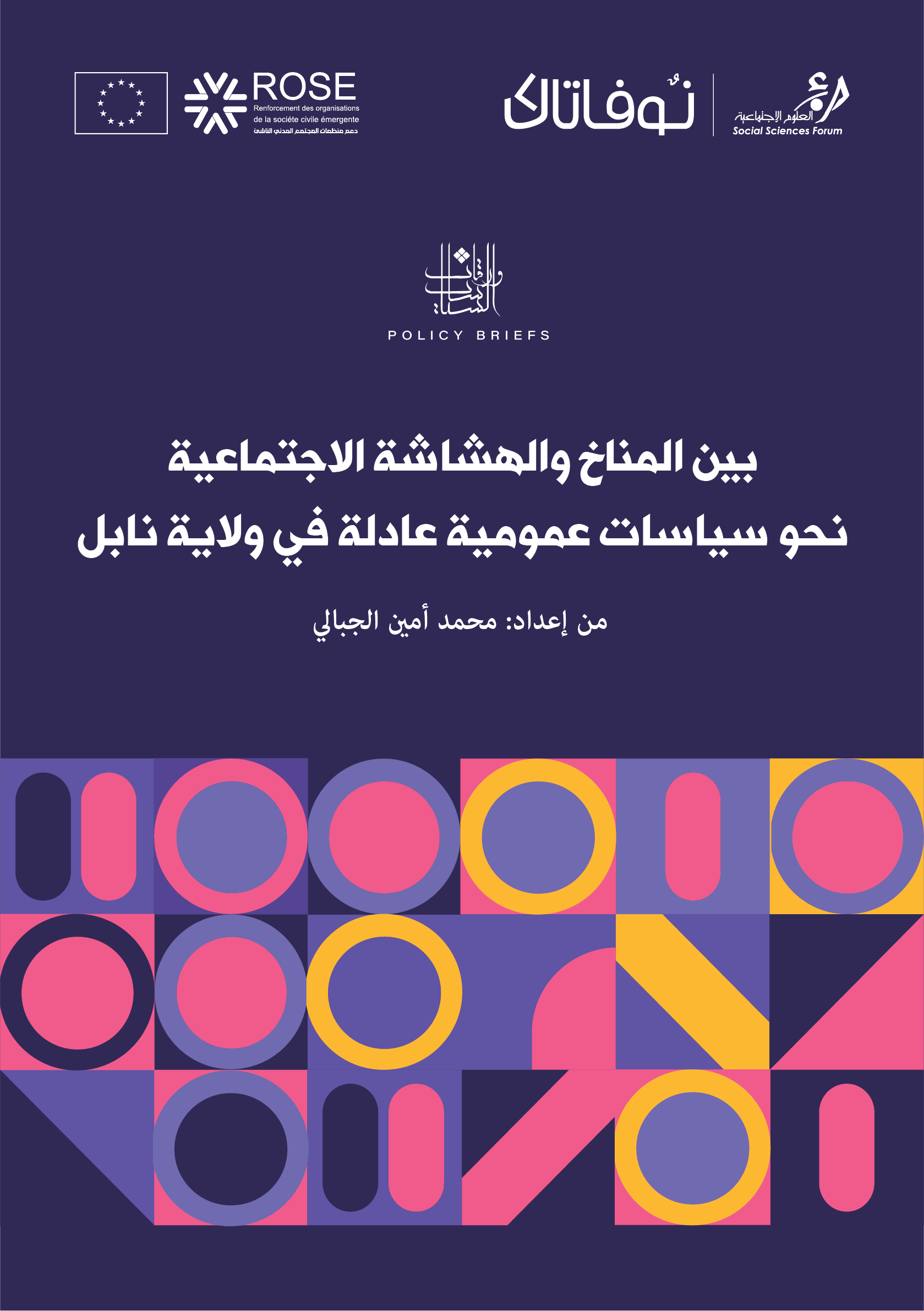
NOVATEQUE is proud to release a new policy brief: “Between Climate and Social Vulnerability: Public Policies to Address Climate-Induced Inequality in Tunisia,” authored by Mohamed Amine Jebali. Based on a field study of 100 respondents in Nabeul, the brief highlights a significant “institutional gap” regarding local authorities’ roles in climate adaptation.
Advocating for a “hybrid policy” approach, the brief proposes five key recommendations to bridge this inequality gap: creating dedicated municipal climate funds, implementing vocational training programs for climate-resilient jobs, and establishing participatory early warning systems. These measures aim to achieve concrete results over the next three years, specifically improving the resilience of 100 vulnerable families and creating 100 green jobs in climate adaptation sectors.